In many communities within the Tolon District, children often grow up in environments where they have limited opportunities to express themselves publicly. Cultural norms, limited exposure, and low self-confidence make it difficult for many students to speak in front of groups, share their opinions, or actively participate in discussions.
This challenge is particularly evident in school settings, where students may hesitate to ask questions, contribute ideas, or engage in leadership roles. As a result, their ability to articulate concerns and influence decisions that affect their education and well-being remains limited.
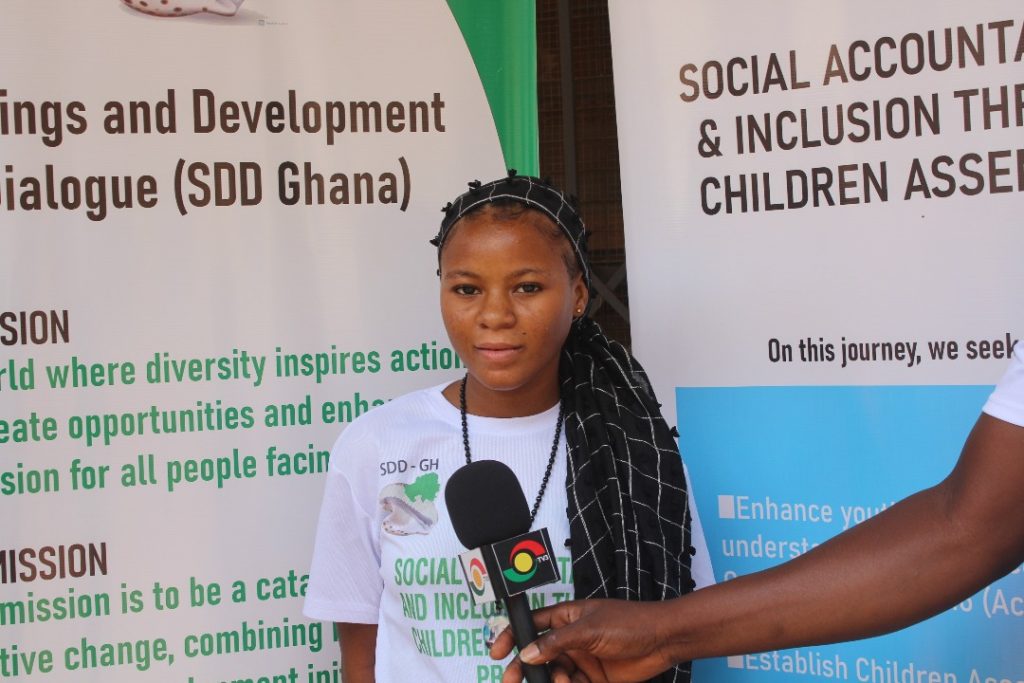
The Social Accountability and Inclusion through Children Assemblies project was designed not only to educate students on governance structures but also to build their confidence, leadership, and communication skills. Through the formation of children’s assemblies, participants were given platforms to regularly engage in discussions, debate issues, and present their views on matters affecting their schools and communities.
Students practiced how to organize meetings, deliberate on issues, and communicate their ideas clearly and respectfully—just like formal assembly members. These repeated engagements gradually helped them overcome fear, build self-esteem, and develop public speaking skills.
As part of the project’s broader engagement activities, students were also allowed to showcase their learning during public events.
A significant moment of transformation was observed during the Governance Day celebration organized by SDD Ghana. At this event, the N-Nye Yam Children Assembly confidently took center stage to perform a live demonstration of how assembly deliberations are conducted before decisions are made.
In front of an audience, the students assumed roles, presented issues, debated them, and collectively worked through decision-making processes. Their performance was clear, structured, and engaging—reflecting not only their understanding of governance but also their newly developed confidence and ability to speak in public.
This marked a remarkable shift from their earlier hesitation and fear of public expression. Students who once struggled to speak in small groups were now confidently addressing larger audiences, expressing ideas, and taking on leadership roles.
The successful performance by the “N-Nye Yam” Children Assembly during the Governance Day celebration demonstrated tangible growth in students’ confidence and communication skills. Their ability to articulate issues, engage in structured deliberation, and perform before an audience highlights the effectiveness of the project in building soft skills alongside civic knowledge.
Teachers and facilitators observed increased participation of students in classroom discussions and assembly meetings, with many students showing greater willingness to speak up, ask questions, and contribute ideas.
This significant change illustrates that when children are provided with safe spaces, practical learning platforms, and opportunities for expression, they can overcome social barriers, find their voice, and actively participate in shaping their communities.